The $50,000 Audio Tour vs. The Under-an-Hour Tour
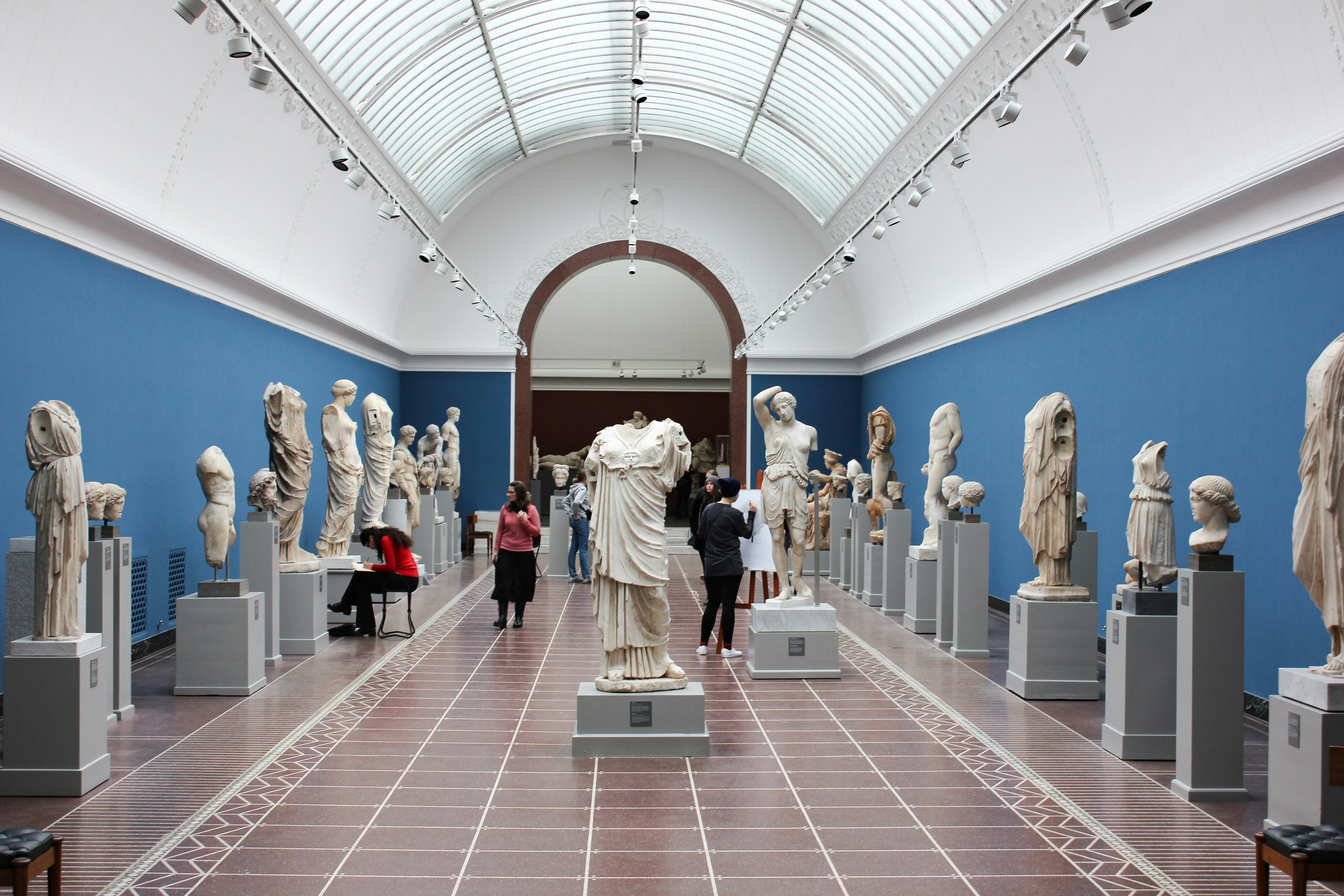
Major museums routinely spend $75,000 to $150,000 on audio tours for significant exhibitions. For institutions with operating budgets in the hundreds of millions, that's a manageable line item.
For the regional history museum with 80,000 annual visitors and a $1.2 million operating budget, it's a fantasy.
But here's what changed in the last two years: A mid-size museum in the Midwest created a professional, multilingual audio tour for their folk art exhibition in an afternoon. Studio-quality narration. Ten languages. Interactive Q&A capability. Total production time: under an hour.
The gap between what major museums can afford and what everyone else can accomplish is collapsing. Not because small museums suddenly have bigger budgets, but because the economics of audio tour production just fundamentally shifted.
The Traditional Production Model: A Cost Breakdown
Let's walk through what a "traditional" professional audio tour actually costs—and why.
Scriptwriting: $8,000-$20,000
You need someone who understands museum interpretation, can write for audio (which is different from writing labels), and knows how to craft narratives that work for diverse audiences. Freelance museum scriptwriters charge $100-$200 per hour. A 15-stop tour with 2-3 minutes per stop? That's 30-45 minutes of final audio, which typically requires 40-60 hours of research, writing, and revision.
Voice talent: $3,000-$10,000
Professional narrators aren't reading off a script once and calling it done. You're paying for studio time, multiple takes, direction, and the rights to use their voice. Want multiple languages? Multiply accordingly. Spanish adds $3,000-$5,000. Mandarin? Another $3,000-$5,000. Each language needs its own professional voice talent.
Recording and production: $5,000-$15,000
Studio rental, audio engineering, editing, mixing, mastering. Every "um," every breath, every background noise gets cleaned up. Files get formatted for different platforms. Quality control takes time. Professional audio engineers charge $75-$150 per hour, and a full tour can require 30-50 hours of production work.
Project management and coordination: $5,000-$10,000
Someone has to coordinate the scriptwriter, voice talent, recording studio, and museum staff. Schedule recording sessions. Manage revisions. Ensure brand consistency. Handle contracts. This is often an agency fee or internal staff time that doesn't appear on invoices but represents real cost.
Platform and delivery: $2,000-$10,000
The audio files need to live somewhere. Apps, web platforms, or hardware devices all have costs. QR codes need to be designed and printed. Integration with existing systems requires technical work.
Total: $30,000-$75,000 for English only
Add $10,000-$20,000 per additional language
Timeline: 12-24 weeks from kickoff to launch
This isn't price gouging. This is what professional production actually costs when you're coordinating multiple specialists, each with their own schedules and rates.
Why Major Museums Could Afford It (And You Couldn't)
Major museums with operating budgets in the hundreds of millions can absorb $100,000+ audio tour costs as a small percentage of their annual spending—often less than 0.1% of their total budget.
For a museum with a $2 million operating budget, that same $100,000 is 5% of your entire year. That's not a line item—that's a major capital decision that competes with:
- A full-time educator's salary
- Conservation work on the permanent collection
- Accessibility improvements
- Marketing and outreach
- Facility maintenance
- Everything else
The math simply didn't work. So most museums made do with:
- Volunteer recordings (free, but amateur quality)
- Basic text-to-speech (cheap, but robotic)
- Text-only interpretation (accessible, but limited engagement)
- Nothing at all (the most common solution)
This wasn't a failure of ambition. It was a rational response to economic reality.
What Changed: The Coordination Tax Disappeared
Traditional audio tour production is expensive primarily because of coordination overhead. You're not just paying for expertise—you're paying for the logistics of bringing multiple specialists together.
Consider what happens when you need to update a single stop:
1. Scriptwriter revises the text ($200-$500)
2. Voice talent re-records that section ($500-$1,000)
3. Studio time for the recording session ($300-$500)
4. Audio engineer edits and integrates the new file ($200-$400)
5. Project manager coordinates all of the above ($300-$500)
Total cost to change 90 seconds of audio: $1,500-$2,900
Timeline: 2-4 weeks
That's why audio tours from 2019 are still live in 2025 with outdated information. Updating costs almost as much as creating from scratch.
But when AI can generate studio-quality narration instantly, when chat-based editing lets curators refine scripts conversationally, when changes go live in minutes—the coordination overhead vanishes.
You're not eliminating expertise. The curator still writes the content, makes interpretive choices, ensures accuracy. But you're eliminating the coordination tax: the scheduling, the handoffs, the waiting, the compounding costs of bringing specialists together.
The New Economics: A Different Calculation
Here's what the same 15-stop audio tour looks like with modern production methods:
Content creation: 2-4 hours
The curator already knows the content. Instead of briefing a scriptwriter who then interprets the brief, the curator works directly with AI assistance to draft scripts. Chat-based refinement means immediate iteration: "Make this section more accessible for families." "Add more context about the artist's technique." "Shorten the introduction."
Narration generation: 15 minutes
Studio-quality voices in 10+ languages, generated simultaneously. No scheduling voice talent. No studio time. No waiting for recordings. The technology has advanced to the point where most listeners can't distinguish AI narration from human voice talent.
Revisions and updates: 5-10 minutes
Change a fact? Update it. Add a new object? Create a new stop. Visitor feedback reveals confusion? Clarify immediately. The tour is living content, not a frozen artifact.
Total time: Under an hour for initial creation
Total cost: Fraction of traditional production
Updates: Minutes, not weeks or months
The quality isn't compromised—it's comparable to professional agency work. What's different is the production method.
What This Means for the 80% of Museums
Roughly 80% of US museums have fewer than 50,000 annual visitors. These are the institutions that have been systematically priced out of professional audio interpretation.
The shift in production economics changes what's possible:
Temporary exhibitions can have audio tours. That four-month show on regional artists? Create the tour two weeks before opening. Update it mid-run based on visitor feedback. Take it down when the show closes. No six-month lead time, no sunk cost that outlives the exhibition.
Multilingual becomes default, not luxury. When translation and recording for each language cost $10,000-$15,000, you served English speakers and apologized to everyone else. When you can generate Spanish, Mandarin, French, and German simultaneously at no additional production cost, language accessibility becomes a standard feature.
Content can stay current. New research? Update the tour. Attribution corrected? Fix it immediately. Conservation work revealed new details? Share them with visitors today, not in next year's tour refresh.
Small museums can compete on experience. The 75,000-visitor regional museum can offer interpretation quality that matches what visitors experience at major institutions. Budget size no longer determines experience quality.
The Uncomfortable Question
If you're a museum director reading this, you might be thinking: "This sounds too good to be true. What's the catch?"
Fair question. Here are the real tradeoffs:
You need to be comfortable with AI narration. The voices are remarkably good—most listeners can't tell the difference. But if you have philosophical objections to AI-generated voices, this approach won't work for you. (Though you might ask: is the alternative—no audio interpretation at all—better serving your visitors?)
You need curatorial staff willing to write for audio. Some curators love writing for visitors. Others prefer scholarly writing. If your team isn't comfortable with interpretive writing, you'll need training or outside help. (Though this is also true with traditional production—someone still has to brief the scriptwriter.)
You need to trust the technology. Early text-to-speech was terrible. That history makes people skeptical. But the technology has fundamentally changed. The question is whether you're willing to evaluate current capabilities rather than past limitations.
You're trading white-glove service for self-service capability. Traditional agencies provide creative partnership, strategic thinking, and project management. Modern tools provide capability and control. Some institutions will always prefer the former. But for museums that have been priced out entirely, the latter is transformative.
A Different Kind of Advantage
For decades, major museums had an insurmountable advantage: budget. They could afford agencies, professional production, multilingual tours, regular updates. Everyone else made do.
That advantage is evaporating. Not because small museums suddenly have Met-sized budgets, but because the cost structure of professional audio interpretation has fundamentally changed.
The 15,000-visitor local history museum can now create interpretation that rivals what visitors experience at institutions 20 times their size. The regional art museum can offer audio tours in six languages without a six-figure budget. The science center can update content weekly instead of waiting years between tour refreshes.
This is what democratization actually looks like: not everyone getting the same resources, but everyone having access to the same capabilities.
The Question Worth Asking
The next time your team discusses audio tours and someone says "we can't afford it," pause and ask: "Can't afford traditional agency production, or can't afford audio interpretation at all?"
Because those are different questions with different answers.
Traditional production will always have a place. Some institutions want full-service creative partnership. Some exhibitions demand custom approaches that require human creativity at every step. Some museums have the budget and prefer the white-glove experience.
But for the majority of museums—the ones that have been systematically priced out of professional audio interpretation—the economics just changed.
The $50,000 audio tour and the under-an-hour tour can now deliver comparable quality to visitors. The difference is how they're made, not what visitors experience.
Which means the question isn't whether you can afford professional audio interpretation anymore. It's whether you're ready to rethink how it gets made.
---
Wondering how this shift affects exhibition planning decisions? We explored the quality-budget-timeline tradeoff in detail. Or see how instant updates change the creative process when production timelines collapse from months to minutes.